
Scientific mind in a daily life
This is an introduction to my blog, which is meant to give you a glimpse of how I see the world and why you might be interested in looking at it through my lens. I find my scientific background the most defining factor of my personality. So below I share a few demonstrations of how it works.
At the very least, you’ll see what a more serious version of a “Big Bang Theory” character would look like in real life.
At the very most, you‘ll get motivated to develop a scientific mindset of your own, to hopefully look at your own life/work/habits/beliefs with a higher degree of structure and awareness.
🚰 Is the water cold or hot?
I was about 7 years old when I’ve formulated my first proper scientific question: “What defines the direction of heat transfer between 2 substances?”.
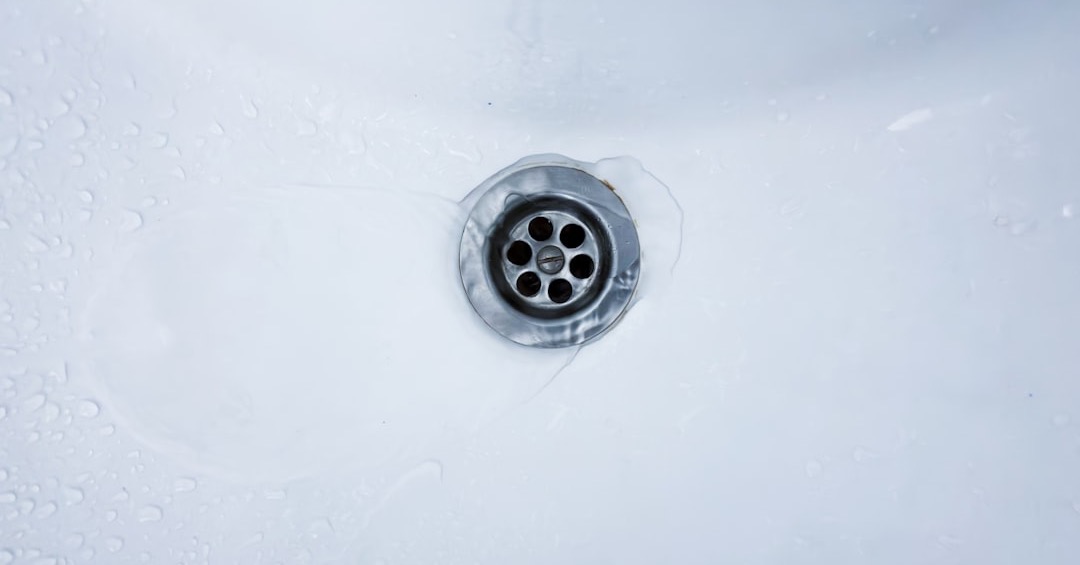
It was winter in Kyiv (Ukraine) and I was washing my hands after a long play with snow outside. I was washing them with cold water, which felt really warm to my frozen hands, so I could clearly feel them getting warmer. Yet I knew that the water was actually really cold, which I normally couldn’t stand when washing my hands after a dinner at home. So I found it confusing that the same “cold” water (marked with a blue circle) was cooling me down when I was warm, but warming me up when I was cold.
My fairly primitive thinking was the following: If the water is “cold” then it should cool me down. And if it’s “warm” then it should warm me up. The fact that it changed depending on how warm I felt made no sense to me at the time. So I understood immediately that there was something missing in my understanding of the process, but I had no idea what.
Only later I’ve learnt that the concept of “cold” and “warm” is relative, and it becomes fairly straightforward once you switch to absolute concepts like “temperature” and “equilibrium”. So I did have my attention and curiosity already then, but I lacked some basic knowledge about the subject, its language and mechanisms at work.
Since then I’ve learnt about many more aspects of “warm” and “cold”, some of which you’d find quite surprising, if not mind-blowing. I’ll talk about those in another post.
🌧️ Why doesn’t rain kill you?
About 10 years later I’ve been sitting at the introductory physics lecture by Dr. Yuriy Opanasiuk at the University of Kyiv-Mohyla Academy, where I had later received my Masters degree. There, for the first time, I have realized how cool the world looks through the lens of physics, when he asked:
How come the rain droplets don’t hit you to death when falling from the clouds at such high altitude?
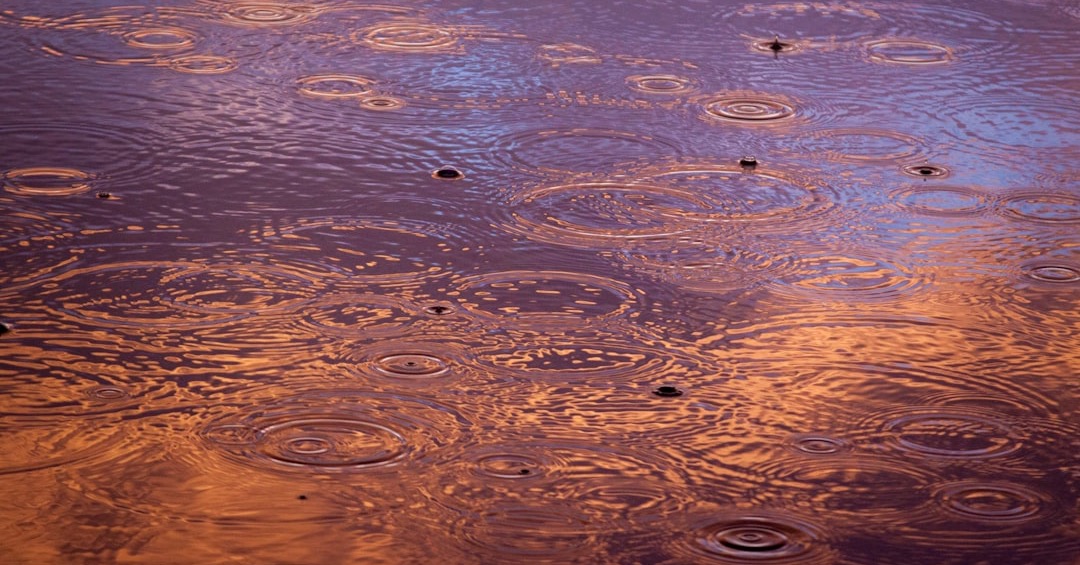
If you studied physics at school, you probably know that Earth’s gravity causes every free-falling object to accelerate, increasing it’s speed by roughly 9.8 m/s (or 35 km/h) every second. It takes a long time for the rain to reach us from the clouds, so it should be flying at a bullet-like speed by the time it‘s down here. But it clearly doesn’t 🤷🏻
So this simple question did 2 things to me:
- it showed me a strange feature of the world that I had never noticed or thought about before;
- now that I had noticed it, I realized that I didn’t know how it actually works — my understanding of the world was clearly incomplete.
The explanation of this phenomenon is very simple once you know the whole picture: in addition to gravity pulling the rain droplets down, there is also a stopping force of the aerodynamic resistance by air, which grows as the droplets move faster. Eventually it reaches the equilibrium speed, at which both forces balance each other and acceleration stops.
This also means that a hypothetical rain on the Moon would be deadly, as there is no atmosphere to slow the droplets down. In reality this is not an issue of course, because an atmosphere is the very thing that produces the rain in the first place.
🎥 Check out how objects behave without air in this video. It’s pretty cool!
In fact, determination of all the forces acting on an object in a specific setting was one of the first topics in the Physics course at university. Once mastered, most kinds of object movements become not only understandable but also predictable, when equipped with some math.
⚛️ Physics in everyday life
Those laws of motion apply equally to a rain drop falling from the cloud, an apple falling from the tree or a ballistic missile falling from the sky. Completely different settings governed by the same underlying principles.
That’s the beauty of the scientific approach — instead of learning by heart a hundred special cases you dig deeper to understand a single underlying principle that describes all of them at once.
Ultimate efficiency!